A useful garden plan begins with how the space will be used and what conditions it already offers. Before choosing paving, furniture or plants, record the size of the garden, the routes through it and the places where sun and shade fall. This creates a practical brief that you can use for your own design or share with a landscape professional.
Start with the activities you want to make room for
Write a short list of everyday uses: eating outside, reading, growing plants, storing tools or giving children room to play. Then rank them. A small garden may accommodate several activities, but each one competes for space and access. Ranking them helps you decide what should be permanent and what can remain flexible.
Describe activities in concrete terms. “A seating area” is less informative than “a place where four people can sit around a table without blocking the back door”. Keep that sentence beside the sketch so decorative ideas do not gradually displace the original purpose.
Record the site before drawing a new layout
The Royal Horticultural Society recommends observing sunlight through the day and assessing existing site conditions as part of garden planning. Its guidance also treats the garden as a space to understand before committing to a design. These observation principles are useful beyond the UK, while plant choices still need to match the local climate. RHS: Get to know your garden.
Make a simple record at several times of day. Mark the date because one observation does not describe every season. Note exposed corners, sheltered areas, existing trees and places where water remains after rain. Photographs from the same viewpoint can help you compare conditions without relying on memory.
Measure movement as well as empty space
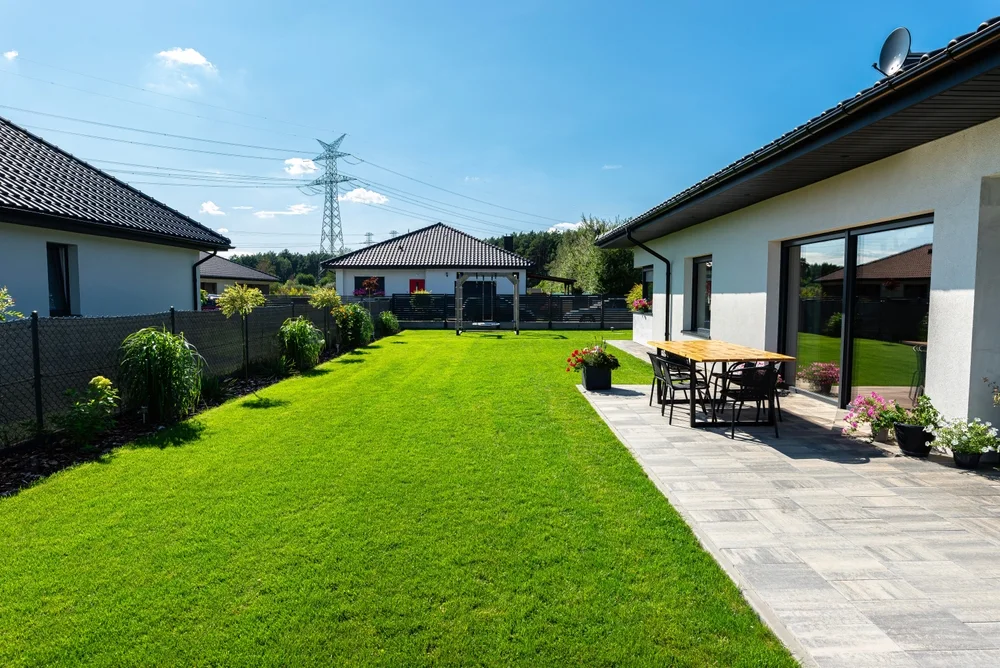
Draw the boundaries, doors, gates and fixed features on a rough plan. Add the routes you already use, including access for maintenance. A layout that looks spacious from above can still be awkward if a chair blocks a door or tools must be carried through a crowded seating area.
For a simple furniture arrangement, mark its approximate footprint temporarily before buying. Place the chairs as they would be used, not only tucked beneath the table. Walk the route with someone seated. This small rehearsal makes the difference between a display layout and a usable one visible.
Build a brief around decisions, not a shopping list
| Part of the brief | What to record |
|---|---|
| Primary use | The activity that should work best in the finished garden. |
| Existing features | What you want to keep, including plants and fixed structures. |
| Conditions | Observed sunlight, exposure and wet areas. |
| Maintenance | Tasks you are willing to do and storage you can provide. |
| Budget phases | What needs to happen first and what can be added later. |
Use this brief when comparing design proposals. Ask how each proposal addresses your priorities. Two drawings may use similar plants and materials while organising movement very differently; the brief gives you a consistent way to discuss that difference.
Choose plants after understanding their space
Soil, light and exposure influence planting choices. The RHS border-planning guidance recommends considering these conditions, along with the style of planting. Its specific seasonal advice is written for its own gardening context, so local climate and site conditions should guide your planting timetable. RHS: Planning a garden border.
For each candidate plant, record its expected mature size and maintenance needs from an appropriate local source. On the sketch, allow for that eventual size rather than the size of the pot in a nursery. Keep access to doors, taps and maintenance points visible on the plan.
Plan the work in a sensible order
Separate layout decisions from finishing touches. Resolve access and any necessary professional assessment of levels or drainage before making a detailed planting purchase. Then divide the remaining work into phases with a clear purpose: establish the main usable area, add planting, and refine movable details after using the space.
Frequently asked questions
Do I need a polished drawing before speaking to a designer?
No. A measured sketch, photographs and a clear list of priorities are a useful starting point. State which observations are approximate so they can be checked during the design process.
What if I am unsure about the style?
Collect a few reference images and describe what appeals to you in each: openness, planting density, seating or materials. Specific preferences are easier to translate into a workable garden than a style label alone.