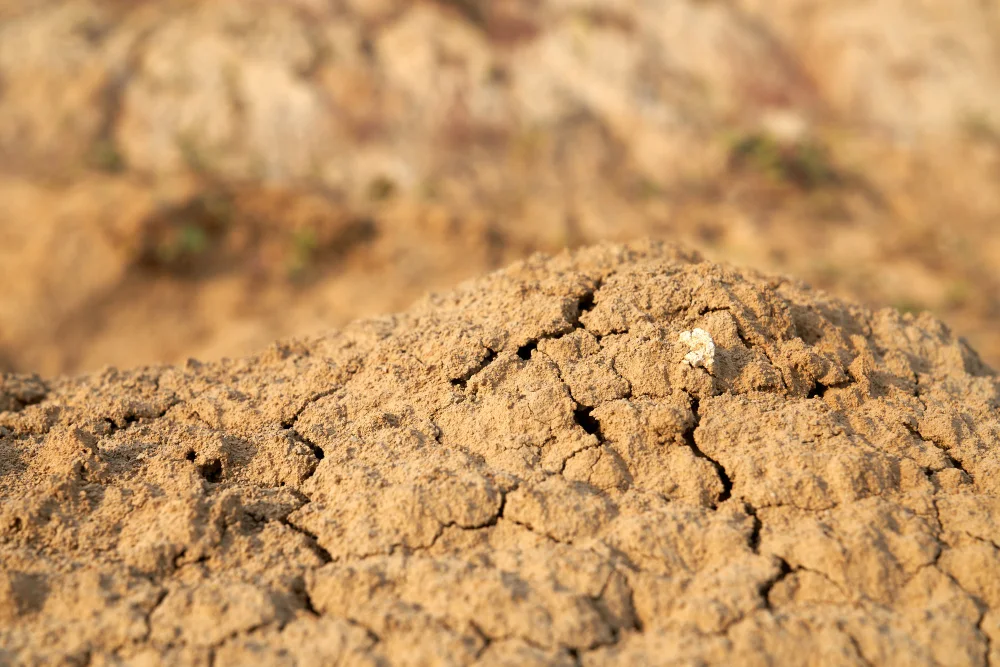
Clay is not inherently bad soil. It can hold water and nutrients well, but becomes difficult when wet, compacted or baked hard. Small casual additions of sand rarely transform a heavy clay profile; long-term structure management is more realistic.
First find out whether it is really clay
If moist soil easily forms a ball and a ribbon in the hand and feels smooth and sticky, the clay share may be high. A soil test is more useful for a definite answer and for pH and nutrients.
Do not work wet clay
Walking or digging on it can break the aggregate structure and increase compaction. Wait for the window when the moisture is suitable for work.
Treat organic matter as a yearly process
Well-matured compost and suitable organic material can improve soil structure over time. Regular soil management is more realistic than a one-time miracle dose.
Be careful with the sand myth
The RHS stresses that the amount of grit or sand needed to change the physical character of heavy clay is not practical in most gardens. Mixing in a small amount at random may not give the result you expect.
A raised bed is sometimes the smarter choice
In practice, this decision should be checked on site rather than assumed from a generic rule. Observe the relevant soil, water, light, access or maintenance condition, then adapt the design to the actual garden. Record what changes after irrigation, rain or maintenance so the next adjustment is evidence-based.
Match the plant to the soil
Choosing species that tolerate clay creates a more sustainable landscape than constantly trying to make the soil fit the plant.
If drainage is a problem, assess it separately
Clay drains slowly, but a high water table, compaction and the wrong grade can also leave water standing. Laying a drain before you see the cause is not the right start.
A field-first rule
Before changing the whole garden, test the assumption in a small area and document the result. Landscape problems are often site-specific; a measured observation is more valuable than a universal minute, dose or plant list.