Yellow turf is a symptom, not a diagnosis. Drought, excess water, uneven sprinkler coverage, mowing stress, compaction, nutrition, pet urine and disease can produce surprisingly similar patches. Read the pattern before changing the entire maintenance program.
First read the pattern of the yellowing
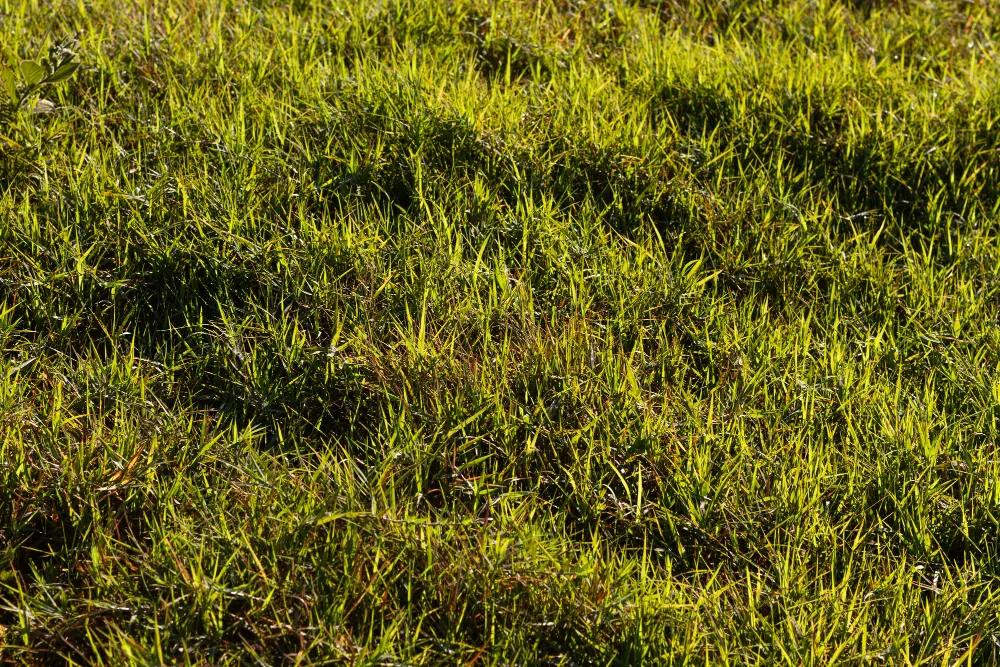
If the whole area has gone dull at once, think watering and seasonal stress; dry islands between sprinklers point to coverage; circular or irregular patches make local causes more likely. Look at the pattern of the garden, not a single leaf.
Do not water before checking the soil by hand
Soil texture, compaction and drainage change how roots receive both air and water. Avoid working heavy clay while wet, and use testing and organic-matter management rather than assuming a single amendment will fix every soil.
Run a sprinkler test
While it is watering, watch whether the heads turn, whether they overlap enough and whether water runs onto the path. Heads with different flow rates in the same zone can water unevenly.
Do not drop the mowing height all at once
Cutting long grass very short in one pass can seriously reduce the green leaf tissue. Dull blades can tear the leaf tips and give the lawn a gray-yellow look.
Too much fertilizer can yellow it too
More fertilizer does not mean a greener lawn. A concentrated application, or the wrong use on dry ground, can burn it. A soil test and the dose on the product label are a safer start.
Think about compaction and drainage
On heavily walked ground, water can run off the surface instead of entering the soil. If water stays a long time after rain or watering, do not focus only on fertilizer.
Do not diagnose a fungus from a photo
Some lawn diseases make similar patches. The lesion on the leaf, the weather and the watering time should be read together; get local expert help when it is needed.
Leave a small test patch
Instead of changing the whole garden’s program the same day, compare a problem area with a healthy one. A week of notes on moisture, watering and mowing makes the cause much easier to see.
A field-first rule
Before changing the whole garden, test the assumption in a small area and document the result. Landscape problems are often site-specific; a measured observation is more valuable than a universal minute, dose or plant list.